
Last reviewed: May 2026 | Community resource — not medical advice. If you are in crisis, please reach out to a mental health professional or crisis line.
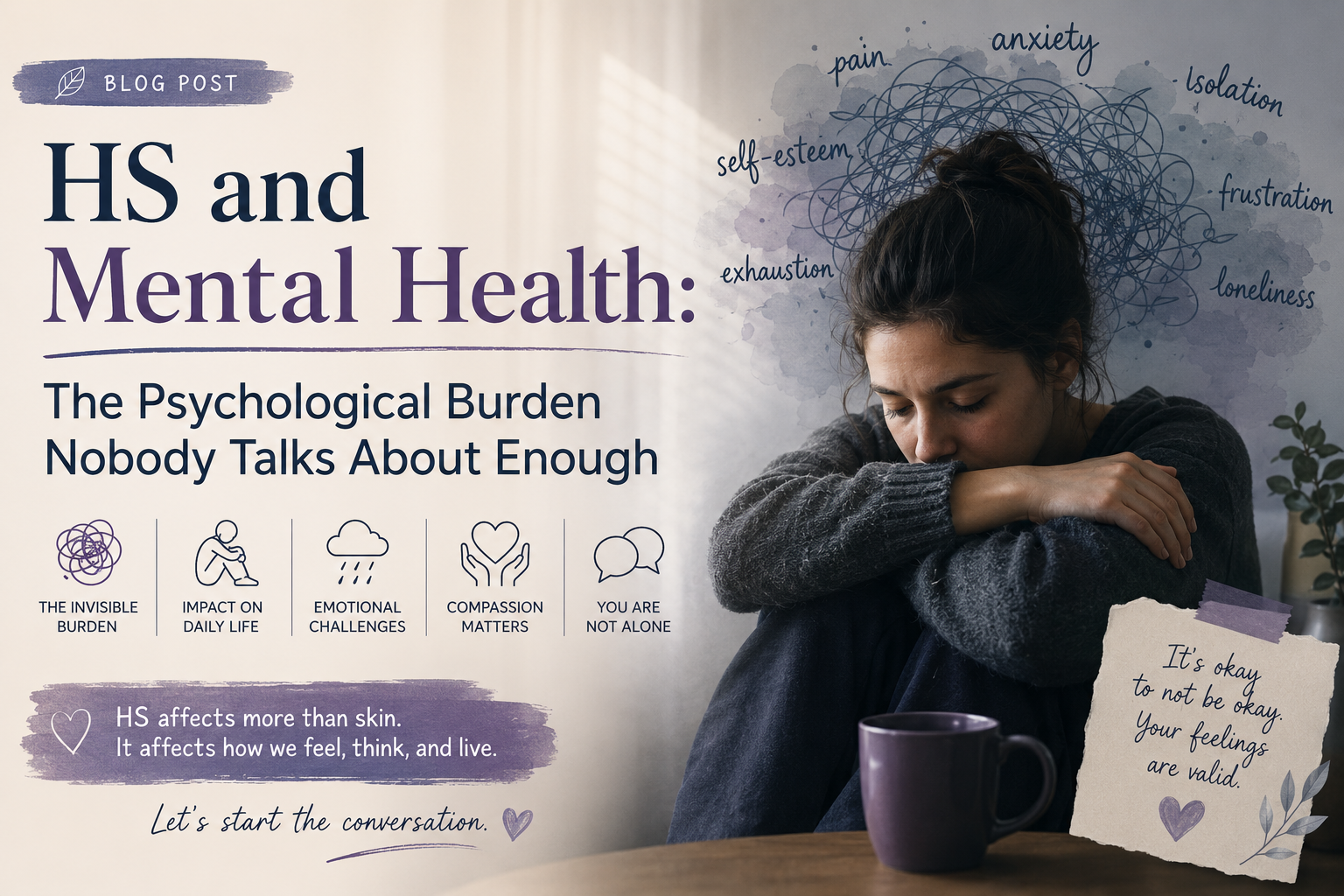
If you have Hidradenitis Suppurativa and you’ve been struggling with depression, anxiety, social isolation, or feelings of shame — you need to know something: this is not a personal weakness. It is a documented, measurable consequence of living with a painful, chronic, stigmatized disease.
The mental health impact of HS is one of the most under-discussed and undertreated aspects of this condition. Patients often suffer in silence because HS already feels too embarrassing to talk about — and piling mental health struggles on top can feel like too much to admit. But the science is clear, and it says: if you’re struggling psychologically, you are not alone, and you deserve support.
This article covers what the research shows about HS and mental health, why the psychological burden is so heavy, what you can do about it, and how to talk to your doctor about the whole picture.
What the Research Says: The Numbers Are Striking
A landmark large-scale study published in JAMA Dermatology in 2025 analyzed data from over 10,000 Danish patients with HS compared to 40,000+ matched controls without HS — followed over a 25-year period (1997–2022). The findings were striking:
- Patients with HS were 69% more likely to develop new-onset depression compared to people without HS
- Patients with HS were 48% more likely to develop anxiety compared to controls
- Those with HS also showed a significantly higher prevalence of pre-existing depression (7.0% vs 0.3%) and anxiety (5.9% vs 0.5%) prior to the study period
These are not small differences. They represent a profound psychiatric burden layered on top of an already painful physical condition.
📚 Reference: Holgersen N et al. “Risk of New-Onset and Recurrent Depression and Anxiety Among Patients With Hidradenitis Suppurativa.” JAMA Dermatology, 2025. Read on PubMed
A 2026 cross-sectional study published in the Journal of Clinical Medicine — involving 84 HS patients in Poland — found that over 20% of HS patients screen positive for depressive and anxiety symptoms, and that these psychological symptoms contributed substantially to impairment of quality of life, often independently of the physical severity of the disease.
📚 Reference: Szepietowska M et al. “A Cross-Sectional Study on Relationships Between Depression and Anxiety in Hidradenitis Suppurativa Patients and Disease Severity, Quality of Life.” JCM, 2026. Read on PMC
A 2025 prospective study published in the Medical Bulletin of Sisli Etfal Hospital confirmed that HS patients experience “profound deterioration in their overall well-being, psychological state and quality of life” — and that this psychological impact was present across all disease severities, not just in the most severe cases.
📚 Reference: “Evaluation of the Psychosocial Burden of Hidradenitis Suppurativa.” PMC, 2025. Read here
Why Is HS So Hard on Mental Health?
Understanding why HS causes such a heavy psychological burden helps reduce self-blame. These are real, identifiable mechanisms — not personal failings.
Chronic, Unpredictable Pain
Pain is one of the most powerful drivers of depression and anxiety. HS pain is not the occasional inconvenience of a headache — it can be severe, constant, and deeply disruptive to sleep, work, and daily function. Chronic pain changes how the brain processes emotions and stress, creating a physiological pathway to mental health deterioration.
Body Image and Shame
HS affects intimate areas of the body — armpits, groin, buttocks, under breasts. The lesions can drain, smell, leave permanent scars, and change the texture and appearance of skin over years. Society imposes enormous stigma on skin conditions, particularly those in “private” areas. The result is profound shame that many patients carry silently for years.
Patients often:
- Avoid intimate relationships because of fear of being seen or smelled
- Wear covering clothing even in heat to hide lesions
- Avoid swimming, gym, or other physical activities
- Decline social events because of pain or because of fear of visibility
- Feel unable to discuss their condition even with close family members
The Diagnostic Odyssey
The average person with HS visits multiple doctors over 7 to 10 years before receiving a correct diagnosis. During that time, they may be told they have poor hygiene, boils, infected ingrown hairs, or “just skin problems.” They may be given treatments that don’t work, or worse, made to feel that their condition is their fault. Being dismissed or misdiagnosed repeatedly is a form of medical trauma that compounds the psychological burden significantly.
Work and Financial Impact
A 2024 study from UAMS noted that approximately 15% of HS patients are disabled or unable to work due to HS pain. Many more work through significant pain, take frequent sick days, or are forced to limit their career choices based on what their body can tolerate on a given day. Financial stress and loss of professional identity are powerful contributors to depression.
The Intimacy Gap
One of the most private struggles for HS patients is the effect on sexual relationships and intimacy. HS affects areas that make physical intimacy painful, embarrassing, or even impossible during flares. Partners of HS patients also experience reduced quality of life. The shame and avoidance around intimacy is a significant but rarely discussed driver of isolation and depression.
How Psychological Distress and Physical HS Are Linked
One of the most important insights from the 2025 JAMA Dermatology study by Holgersen et al. was that the increased risk of depression and anxiety did not correlate strongly with disease severity. In other words, you don’t have to have severe HS to have severe mental health impact.
The researchers suggested the risk may be driven by factors like pain, the unpredictability of flares, and body image concerns — all of which affect patients at every stage of disease. This finding has an important implication: dermatologists and other healthcare providers should be asking about mental health at every appointment, not just when the skin disease is severe.
There is also growing evidence of bidirectional effects: not only does HS cause psychological distress, but stress and anxiety can trigger or worsen HS flares through activation of inflammatory pathways. This creates cycles that are difficult to interrupt without addressing both the physical and psychological components.
What Helps: Practical Approaches to HS and Mental Health
1. Tell Your Dermatologist — All of It
Many patients don’t mention mental health struggles to their dermatologist because it feels off-topic. It isn’t. Dermatologists who treat HS are increasingly trained to recognize the psychological burden of the disease and can adjust treatment accordingly, refer to mental health professionals, or use tools like the DLQI (Dermatology Life Quality Index) to track how HS is affecting your overall wellbeing.
At your next appointment, consider saying: “HS has been affecting my mood and my daily life significantly. Can we talk about that as part of my overall care?”
2. Cognitive Behavioural Therapy (CBT)
CBT is one of the most evidence-based treatments for both depression and anxiety. A 2025 study published in the Australasian Journal of Dermatology found an opportunity specifically for cognitive flexibility training — a component of CBT — to improve mental health outcomes in HS patients. Cognitive flexibility training helps people respond to difficult situations (like a painful flare) in more adaptive ways, reducing emotional reactivity and improving wellbeing.
📚 Reference: “Cognitive flexibility and mental health outcomes in HS patients.” Australasian Journal of Dermatology, 2025. Read on Wiley
Online CBT programs (available in many countries through public health systems or affordable apps) can be a good starting point if in-person therapy isn’t accessible.
3. Support Groups and Peer Connection
The research is consistent: social support is protective against depression. Knowing that you are not alone — that other people truly understand what you’re living through — has measurable mental health benefits.
Online communities like HS Warriors specifically exist to provide this. Peer connection with others who have HS is not a substitute for professional mental health care, but it is a meaningful and accessible form of support that many patients find deeply valuable.
4. Pain Management as Mental Health Care
Because chronic pain is such a driver of psychological distress in HS, better pain management is also better mental health management. This might mean:
- Discussing pain management specifically with your dermatologist or a pain specialist
- Asking about prescription pain relief for severe acute flares
- Exploring non-pharmacological pain management: warm compresses, gentle movement, positioning
Don’t accept the idea that pain is just “part of HS” and that nothing can be done. Managing pain better typically improves mood, sleep, and overall function.
5. Mind-Body Practices
While not a replacement for medical treatment, practices like mindfulness meditation, yoga adapted for people with chronic pain, and breathing exercises have solid evidence for reducing anxiety and improving mood in chronic illness populations. They can be started for free at home (apps like Calm, Insight Timer, or free YouTube resources) and have no downsides.
6. Mental Health Medication
If depression or anxiety has become significant, medication may be appropriate alongside therapy. Talk to your primary care doctor or a psychiatrist. Some antidepressants (notably duloxetine) also have evidence for chronic pain management, making them potentially useful for both conditions simultaneously.
Talking to People in Your Life About HS and Your Mental Health
One of the hardest parts of HS isn’t the physical disease — it’s the isolation of carrying it alone. If you’re considering opening up to a partner, family member, or friend, here are some thoughts:
You don’t owe anyone a full explanation immediately. Start with what feels manageable. “I have a chronic skin condition that causes me a lot of pain and affects my confidence” is a complete, honest sentence that doesn’t require showing anyone anything.
Resources exist to help explain HS to others. You can share links to patient-friendly explanations (like our What Is HS? page) rather than having to explain everything yourself from scratch.
Reactions may surprise you. Many patients who open up about HS find that people close to them are far more understanding and supportive than feared. Isolation often perpetuates itself — the longer you hide HS, the more alone you feel, and the harder it becomes to share.
A Note on Suicidal Thoughts
If you are having thoughts of suicide or self-harm, please reach out now. You can contact:
- International Association for Suicide Prevention: https://www.iasp.info/resources/Crisis_Centres/ — directory of crisis centres by country
- Crisis Text Line (US): Text HOME to 741741
- Samaritans (UK & Ireland): Call 116 123 (free, 24/7)
- Lifeline (Australia): 13 11 14
Living with chronic pain and stigmatized illness is hard. These feelings are understandable. But they can be treated, and things can get better — especially when you have the right support.
You Deserve Holistic Care
The bottom line: HS is not just a skin condition. It is a whole-person disease that affects your physical health, your mental health, your relationships, your work, and your sense of self. You deserve care that treats all of these dimensions.
If your current healthcare team isn’t asking about your mental health, bring it up. If you don’t have a mental health provider, consider seeking one. And whatever your journey looks like, the HS Warriors community is here — because sometimes the most important thing is just knowing that someone understands.
👉 Mental health support discussions 👉 Personal stories from the HS community 👉 Join HS Warriors — free and anonymous
This article is for informational purposes only. If you are experiencing significant depression, anxiety, or thoughts of self-harm, please seek support from a qualified mental health professional.
Sources & Further Reading:
- Holgersen N et al. “Risk of New-Onset and Recurrent Depression and Anxiety Among Patients With HS.” JAMA Dermatology, 2025. PubMed
- Szepietowska M et al. “Depression and Anxiety in HS Patients.” Journal of Clinical Medicine, 2026. PMC
- “Evaluation of the Psychosocial Burden of Hidradenitis Suppurativa.” PMC, 2025. Read here
- “Cognitive flexibility and mental health outcomes in HS.” Australasian Journal of Dermatology, 2025. Wiley
- “Mental Health Burden Linked to HS Severity.” EMJ Reviews, 2025. Read here
- International Association for Suicide Prevention. Crisis centre directory. iasp.info
- National Institutes of Health — PubMed HS research. pubmed.ncbi.nlm.nih.gov